The Deep Discount Bin: A Field Guide to Demons

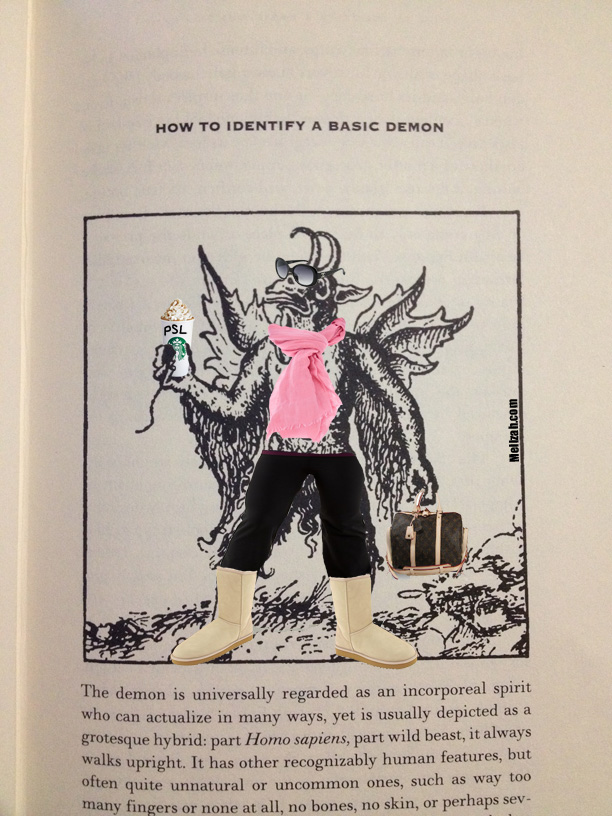
a basic demonSummoned by reciting Katy Perry lyrics into the mirror at midnight.

Every once in a while, I will troll the clearance section of Half Price Books and bring something home that’s dirt cheap and looks amusing. While there recently, I found yet another book that I couldn’t possibly leave in the store*: A Field Guide to Demons, Fairies, Fallen Angels and Other Subversive Spirits by Carol K Mack and Dinah Mack. You know, another sort of useful, everyday item to have around the house.

Here’s the bad news for you at-home exorcists, demonologists, and aspiring Ghost Adventures cast members: in the guide to identifying basic demons, the book essentially says that anything and everything can be a demon.

Demons, using only their energy, can appear as smoke, as temptresses, animals, grains of sand, flickering lights, blades of grass, or neighbors**.

Now, I would buy that there’s the occasional neighbor out there who is actually a demon in disguise. Demonic possession makes a lot more sense than any other reason I can think of as to why  a former neighbor mowed his entire lawn with a weed whacker over the course of two days in thirty-second spurts. BZZZZZZZZZZZZZZZZZZ. BZZZZZZZZZZZZZZZZZ. BZZZZZZZZZZZZZZZZZ. Either that guy was a demon bent on driving me crazy or he was trying to wipe out his demonic grass infestation. Grains of sand, though? Ain’t no one got time for that. If I accidentally build a demon-inhabited sandcastle, I’m just going to call it Demon Manor and be done with it.  For an identification guide, it’s not very useful. Same deal with fairies:

There is no certainty about their essential form, but the consensus is they are transparent.

Man, whatever would you do without this truly helpful guide?

After the basic introductions to demons and fairies, the book is broken into sections of all of the places that demons can be found: water, mountains, forests, deserts, the home, and the mind. In each section is a smattering of creatures, their history, and how they can be defeated. Once you reach the section about demons of the psyche, however, things start to fall apart as the authors reach further and further for things to include. The Id. Jung’s Shadow. Mr. Hyde. Granted, you are just as likely to run into Mr. Hyde in your bedroom as a tengu or a djinn, but it seems misplaced to include a fictional portrayal of a real mental disorder as a demon you can fight, especially in light of the fact that the mentally ill have long been accused of demonic possession and treated brutally (or even killed) during exorcisms.

I bought this book for a couple of different reasons. I’m deeply into mythology, and I like having books on hand as reference materials for art and for pleasure reading. I wasn’t sure when I bought it if it was going to be a detached compendium of folklore, a painfully earnest guide to demon hunting, or some lighthearted farce. The problem with this book is that it doesn’t know what it wants to be, either. The authors refer to the guide as an essential resource leading one to believe they are in earnest, but then they undermine it with half-assed graspings at things that could only be tangentially related to the subject matter. It’s missing too much to be comprehensive (the authors explain this as making the guide “highly selective”) but at the same time they include things that have no relation to folklore, a “demon” that they blatantly made up, and three different entries on Satan. The result is that it’s hard to use the book as a mythological resource as it’s not clear what is in the actual storytelling history and what they’ve manufactured from whole cloth. Add in the “this is how you disarm and dispell demons” ridiculousness especially as pertains to real mental illness and deep psychological trauma, and the book becomes a hot mess. It would be much more interesting and useful if it was fully a “we believe this is real” field guide or fully a mythological resource, but the half-mocking tone doesn’t serve it either way.

I guess they can’t all be mega-discount winners. Maybe this time the clearance section of Half Price Books trolled me.


*Incidentally, this may lead to my hoarder style undoing, crushed by mountains of my own schadenfreude.

**It’s also possible that this blog post is a demon.
Spotted on the Roadside: When Life Gives You The World’s Largest Lemon…

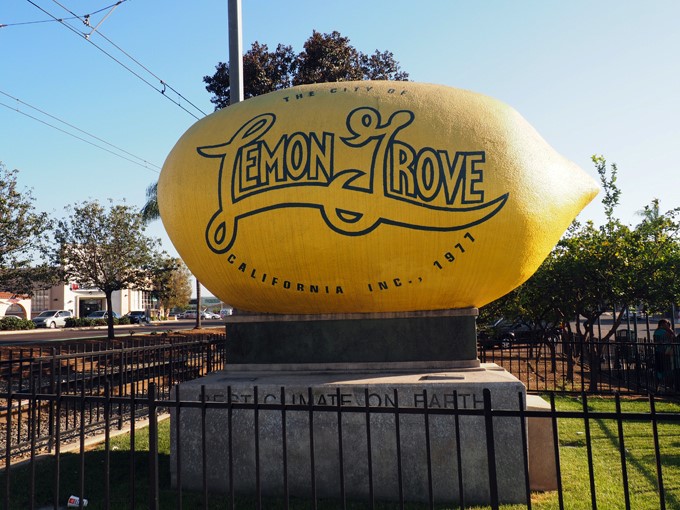
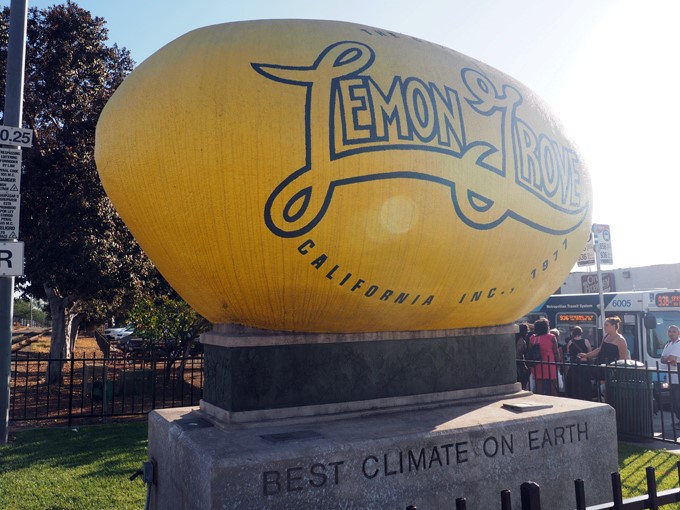
giant lemon

lemon grove

I try not to go anywhere with preconceived notions about what it will be like, because that road leads to disappointment nearly always. With the giant lemon in Lemon Grove, however, it was almost impossible to not imagine the lemon in front of a literal grove of thousands of blossoming lemon trees, wafting their scent out into the sunshine. I may have also pictured a lemon farmer selling cool, refreshing glasses of lemonade nearby. So needless to say, my vision could not have been more wrong if I was James Van Praagh trying to cold read. The Lemon Grove lemon is a metro lemon, flanking both the trolley and the bus stop, and if you’re looking for refreshment, you can buy a pack of smokes at the shop across the street. There were some lemon trees behind it, though, because even your average shitty psychic gets lucky once in a while. Lemon Grove’s lemon was originally built as a parade float for San Diego’s 4th of July parade in 1928. In 1930, it was plastered and has proudly proclaimed Lemon Grove’s slogan for 85 years: Best Climate on Earth. The town wasn’t incorporated until 1977, however, so clearly the paint job has been updated at some point during that time period. Nowadays, Lemon Grove is more notable for being the place where some stolen mummies were stashed in a garage for over a decade than lemon trees, but the giant lemon remains as a testament to the town’s roots.

Spotted on Main Street in Lemon Grove, CA.

A visit to Six Flags Magic Mountain

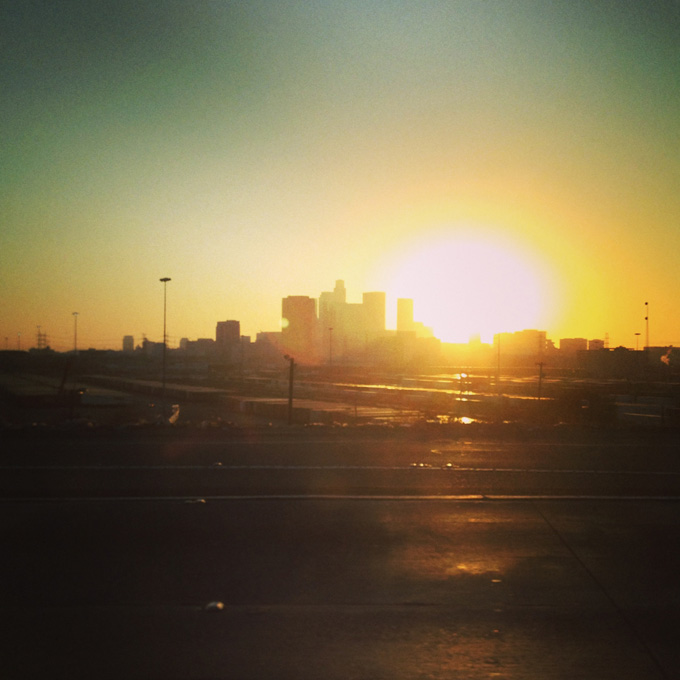
los angeles sunset

Depending on the time of year you ask me, I have one big regret about moving to the Pacific Northwest. If you ask me during winter, it’s winter: the short days, the long dark, the dreariness, the relentless soggy wet-hem shoe-leaking mold-growing constant drizzle glasses-spotting hair-frizzing dampness of the season. If you ask me any other time, it’s the lack of roller coasters in the immediate vicinity. Sure, there’s a couple at Wild Waves (missing bolts and all!), but it’s first and foremost a water park.

I used to practically live at Six Flags Great America in the summer. With a season pass, I had very little incentive not to. After all, it’s not like you can feel face-rippling g-force induced exhilaration on the couch. At least not easily.

When I lived in California, the nearest Six Flags park was Magic Mountain. The two hour drive to get there (with no traffic, and when is there ever zero traffic in Los Angeles?) plus college, plus two jobs meant that I generally made it to the park once or twice a year at most. The last time I went was in 2010, and the entire day was an ordeal, to put it lightly. This time, I was hoping for a better experience.

It was indeed better than last time, but that would not have taken much. The visit got off to not a great start when we pulled up to the parking lot and were informed that their credit card system was down, and we’d have to use their on-site ATMs to pay for parking, buy our tickets, etc. With the cost of two adult tickets plus parking, we were already bumping up against their ATM withdrawal limit, which meant that we were blessed with being able to pay their exorbitant ATM fee more than once.

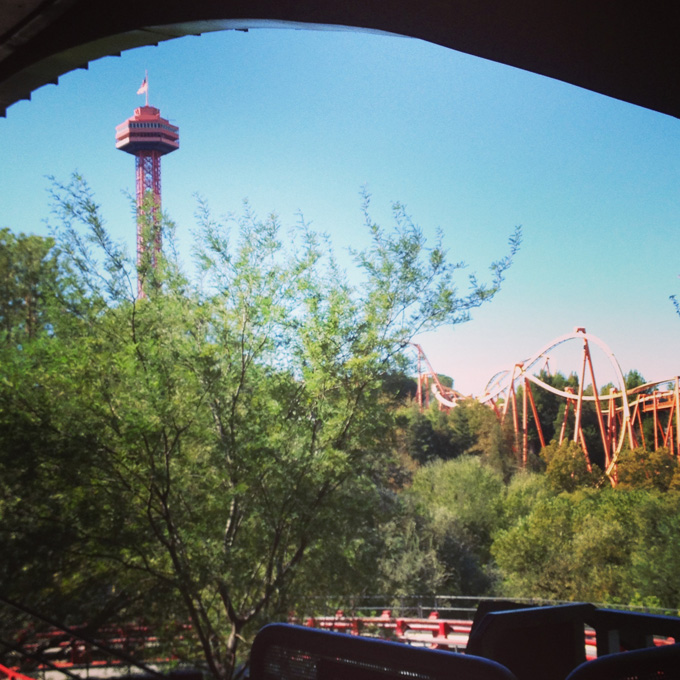
six flags magic mountain

The first ride we hopped on was X2. It has seats that pitch forward and back on a separate axis from the track, and the result is a ride that’s incredibly intense. This ride used to be my absolute favorite, and I don’t know if it’s that I’m getting old or less used to coasters or what, but after the first drop, when it pulls you up backwards, it was almost too much for me. I felt like I couldn’t breathe, and not in an “I’m having so much fun” sort of way, more in a “I think I might be dying” way.

Our next ride was Viper, and we were able to hop right on the ride with zero wait. It’s the last remaining Arrow Dynamics Megalooper coaster in the world. This is a more standard seated coaster with an over the shoulder harness; it reaches speeds of 70 mph and turns riders upside down seven times.  I remember its former twin, Shockwave, at Great America, and it had the same drawback–it rattles your head between the shoulder restraints like those mixing beads in a can of spraypaint. The only way to sort of deal with it is to press your head as hard as you can against one side of the restraints to minimize the amount of times it crashes into the other side. With better padding, this ride could be as awesome as it used to be.

Hands down, my current favorite coaster at Magic Mountain is Tatsu. This coaster has you sit down, restraints lock in your upper body and your legs, and the seat is then pulled up so you’re looking at the ground. It’s like flying in the claws of a giant eagle. On every roller coaster, you’re trusting your life to the machine–Tatsu feels extra scary because it’s more evident than ever that the restraints are all that’s keeping you from an unpleasant splat on the pavement.

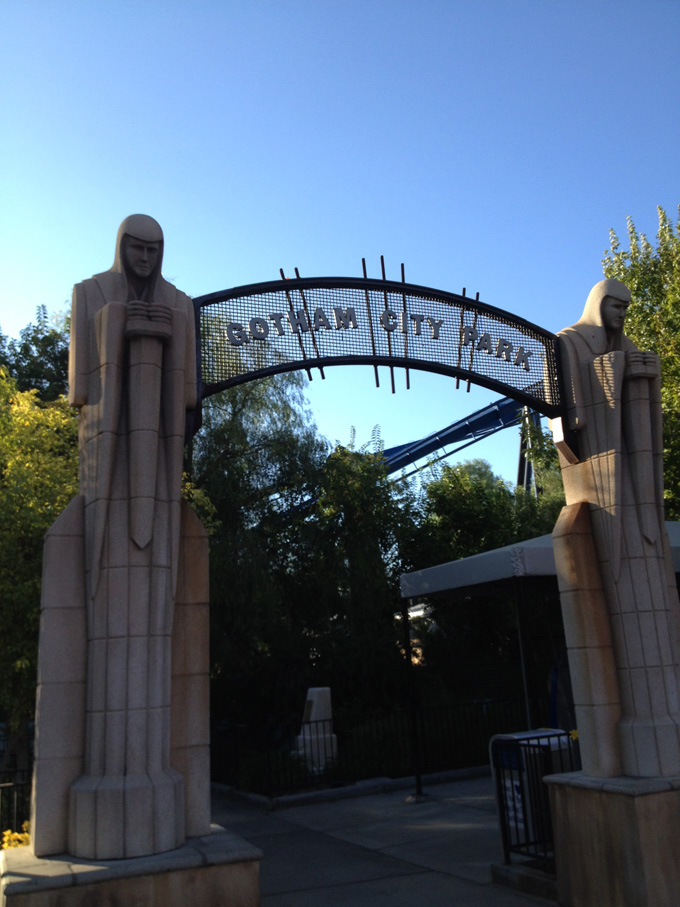
The one ride I’d urge you to stay away from at all costs is Green Lantern. It’s another ride where the seats pitch on a separate axis from the track, which is back and forth in a ribbon pattern. They need to rename this ride The Migraine Machine, because it gave me one of the worst headaches of my life. Jason ended up having to backtrack halfway through the park to find a kiosk that was selling aspirin, while I waited around because the thought of walking with my head pounding so badly made me want to barf. So instead, I scoped out a small area of shade and basically prayed for death. In other words, I don’t recommend it. gotham city park magic mountain

We ended up riding nearly every roller coaster that was open that day, which was a far cry from my previous visit, when I rode only a couple due to high winds closing the rest. The only one I took a pass on was Superman, and that’s because the line was ridiculous and didn’t move once in ten minutes. Very few of the other coasters had extended wait times. Some were so short we only had to wait for one or two cars before riding. It was one of those rare sorts of days where buying a fast pass wouldn’t have been worth the added expense because you wouldn’t really save any line time. We walked straight on to Batman: The Ride, which is always exciting for me, because I remember when it was hot shit in 1992 and you had to wait for five hours to ride for 45 seconds and it was still totally worth it. I loved it then and I love it now.

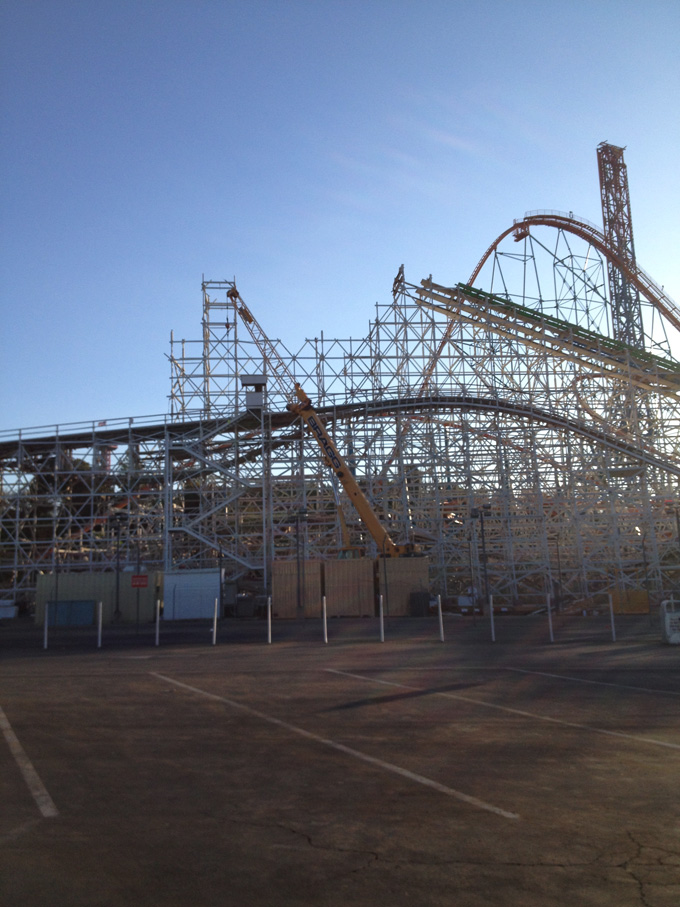
burned collossus six flags

The thing about remembering what Batman: The Ride was like when it was new, and the park in general in its heyday is that it is beyond evident how much it’s declined since then. So much of the stuff that’s supposed to create an atmosphere now serves to create a very different atmosphere: one of disrepair and neglect. Things are broken, tagged, falling apart, trash is everywhere, and even some of the rides operated in a way that suggested penny-pinching, which is not what you want to see when you’re trusting the park literally with your life. It shouldn’t be that way, especially at a park that boasts the largest number of roller coasters in the world. Clearly they’re making enough money post-bankruptcy to continue building; it would be nice to see some of those funds diverted to upgrading and maintaining what they already have. They’ve already stopped dropping millions for temporary licenses like Terminator, so that’s a start.  Although I can’t directly compare Six Flags to all of the competing parks in the area (I haven’t been to Disneyland for over twenty five years, though I have read that their park standards are by far the highest), I’ve been to three different Universal parks in the last few years, and Universal Studios blows Six Flags out of the water in terms of creating a clean, welcoming, functional atmosphere that sometimes feels downright magical. In every way, Six Flags is trying to compete with these other parks–they’re charging a comparable ticket price, they’re selling similarly expensive food and souvenirs, they’re licensing properties to widen their appeal, they’re even expanding their Fright Fest offerings to try and go toe to toe with Halloween Horror Nights and Knott’s Scary Farm. But they’re just not there. Right now, they’re only pulling ahead in the “rides that spontaneously and mysteriously light on fire” category. I love roller coasters, and I have a lot of love in my heart for Six Flags and the time I’ve spent there, but with two mediocre visits in a row, I don’t see myself making the effort to go back to Magic Mountain.